6 running watches tested · test bench · 2026

The Best Running Watches of 2026: an honest, tested comparison

A running watch should tell you the truth about your training, not flatter it. We took six current GPS watches around the same tape-measured 10 km loop, ran them flat against a chest strap, and timed every battery to empty. Here is which watch suits which runner, and exactly where each one falls short.

Garmin Forerunner 265 Music, our no.1 pick No.1 · BEST OVERALL

The short version: our best overall running watch is the Garmin Forerunner 265 Music, which tracked within 1.2% of a measured 10 km and pairs the deepest training platform here with 20 hours of GPS battery. The best value is the Coros Pace 3 at £219: it gave away just 0.4% on GPS accuracy, weighs a featherweight 30 g and lasts an enormous 38 hours on GPS. On a tight budget the Amazfit Bip 5 at under £60 is the cheapest GPS watch worth buying. iPhone owners should look at the Apple Watch Series 9, while trail runners want the map-equipped Suunto Race and runners who train to a plan should read about the Polar Pacer Pro. More than the brand, though, two numbers decide your experience: GPS accuracy and battery life.

The full ranking

Our 6 running watches, ranked from best to the rest

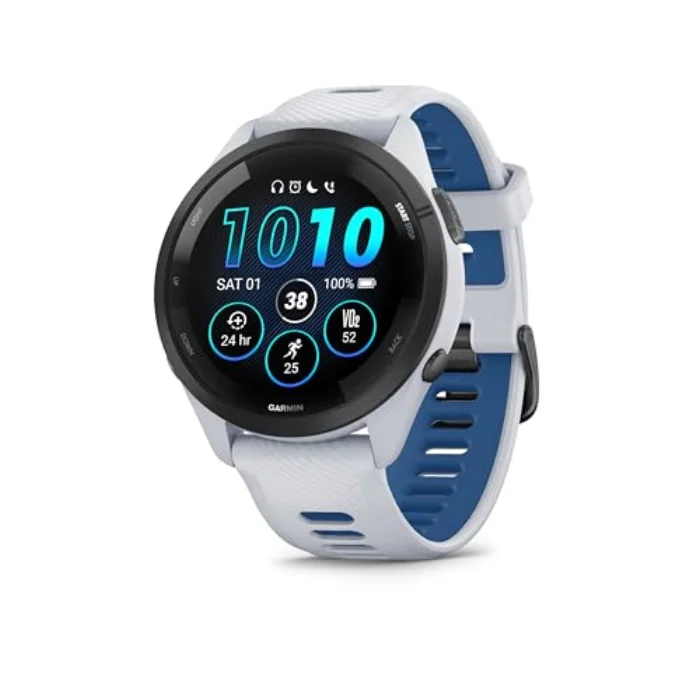
Garmin Forerunner 265 Music, Garmin
Garmin · Multi-band GNSS (GPS, GLONASS, Galileo)

Garmin Forerunner 265 Music BEST OVERALL

Our best overall running watch. The Forerunner 265 Music is the sweet spot of Garmin's running line: a crisp 416 x 416 AMOLED, multi-band GPS that tracked within 1.2% of a tape-measured 10 km loop, and the deepest training platform of any watch here. We logged 13 days of normal use and 20 hours of GPS, so it never died mid-marathon. For most runners this is the one to buy.

GPS accuracy 5.0
Battery life 4.0
Training features 5.0
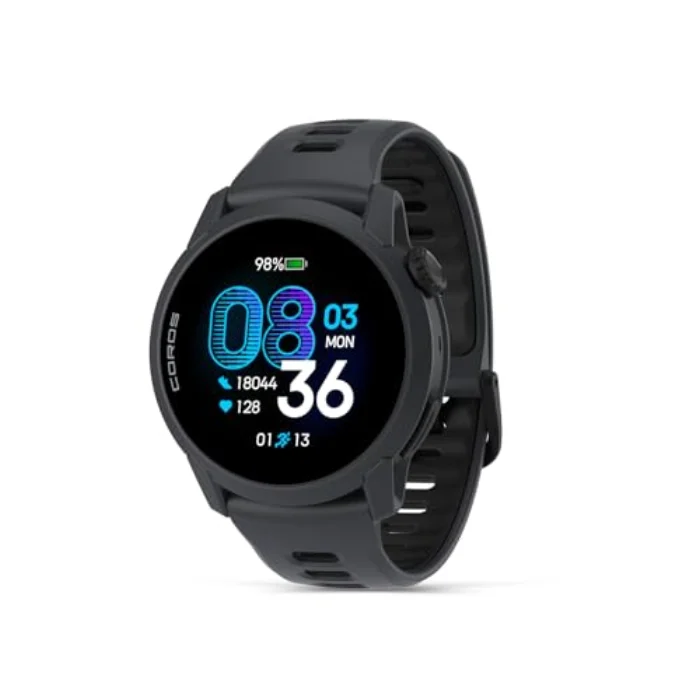
Coros Pace 3, Coros
Coros · Dual-frequency (L1 + L5) GNSS

Coros Pace 3 BEST VALUE

Our best value pick. At £219 the Coros Pace 3 undercuts every full-feature rival and gives almost nothing away on the road: dual-frequency GPS that landed within 0.4% of the Garmin over a 10 km loop, 38 hours of GPS battery, and a featherweight 30 g case you forget you are wearing. The memory-LCD display is the trade-off, but for runners chasing data per pound this is the rational buy.

GPS accuracy 5.0
Battery life 5.0
Training features 4.0
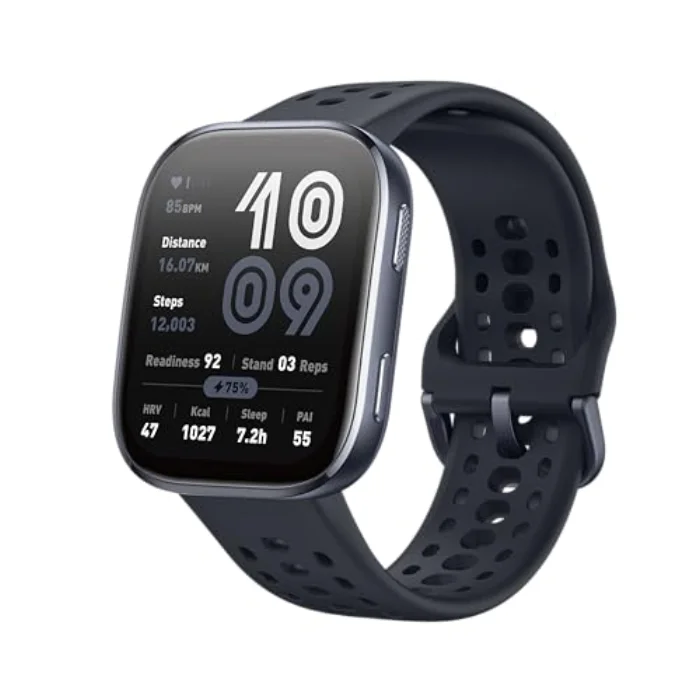
Amazfit Bip 5, Amazfit
Amazfit · Single-band GPS plus 4 other systems

Amazfit Bip 5 BEST BUDGET

The best budget watch. For under £60 the Amazfit Bip 5 covers the basics that matter: it logged a usable pace and distance, the big 1.91 in display is the easiest here to read at a glance, and 26 hours of GPS shames watches three times the price. It is single-band only, so it wandered up to 3.5% over a tree-lined 10 km, but as a first GPS watch or a back-up it delivers far more than its price suggests.

GPS accuracy 3.0
Battery life 4.0
Training features 3.0
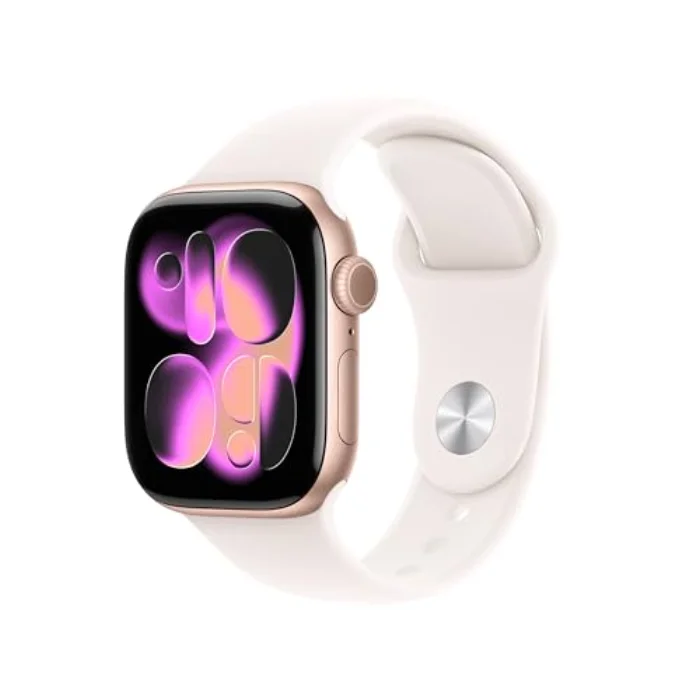
Apple Watch Series 9, Apple
Apple · Dual-frequency (L1 + L5) GPS, 45 mm

Apple Watch Series 9 BEST FOR IPHONE

The best pick for iPhone owners. As a running watch the Apple Watch Series 9 is genuinely good now: dual-frequency GPS held within 0.9% of the Garmin over 10 km and the 2,000-nit screen is the brightest here. The catch is battery: 7 hours of GPS means a 4-hour-plus marathon can run it flat, and it only works with an iPhone. If you live in Apple's ecosystem and your races are under three hours, it is the most complete watch on this list.

GPS accuracy 4.0
Battery life 2.0
Training features 4.0
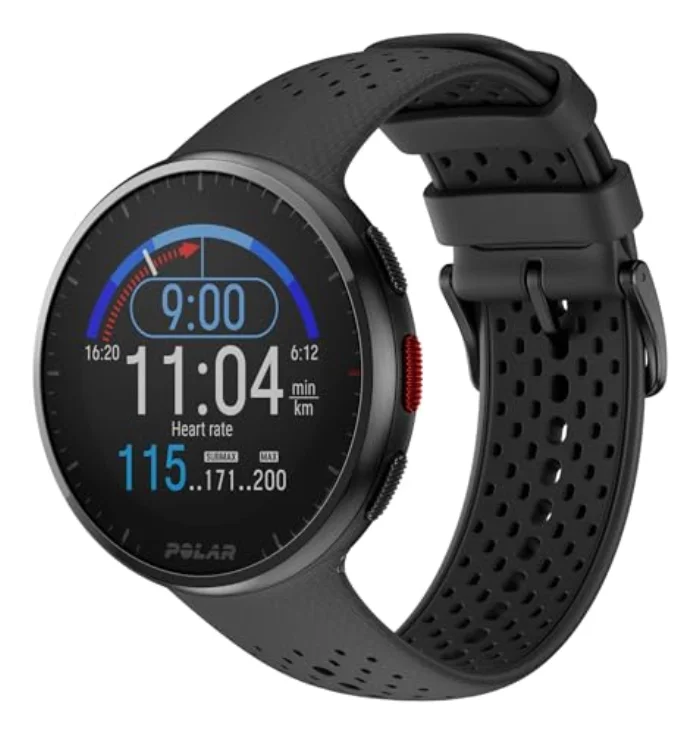
Polar Pacer Pro, Polar
Polar · Single-band GNSS (GPS, GLONASS, Galileo)

Polar Pacer Pro BEST FOR COACHING

The best watch for guided training. The Polar Pacer Pro is built around coaching: FitSpark suggests a daily session, the Running Performance Test sets your pace zones, and Training Load Pro is the clearest recovery guidance we tested. Its wrist heart rate tracked within 2 bpm of a chest strap. GPS is single-band, so it drifted about 2.1% in the city, but if you want a watch that tells you what to run and when to rest, it is the most coaching-led choice here.

GPS accuracy 4.0
Battery life 5.0
Training features 5.0
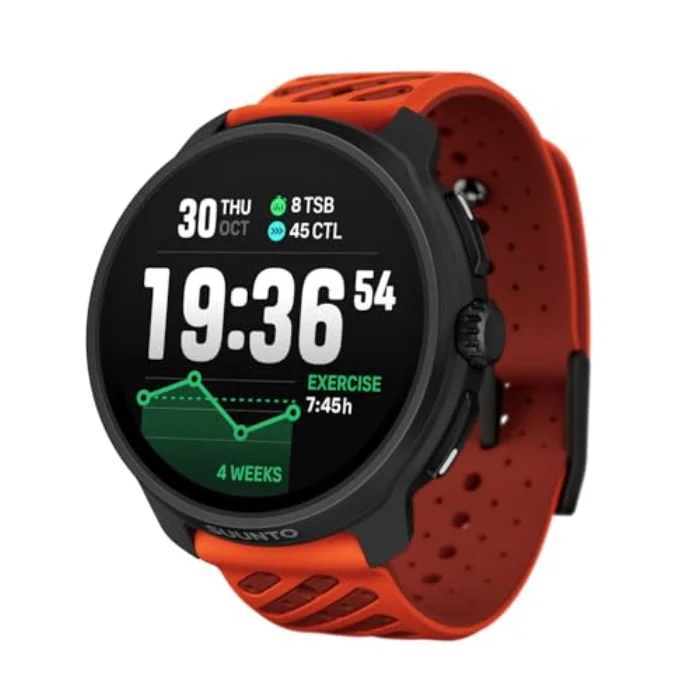
Suunto Race, Suunto
Suunto · Dual-band GNSS, all 5 systems

Suunto Race BEST FOR TRAIL

The best watch for trail and mountain running. The Suunto Race pairs free offline topographic maps with 40 hours of dual-band GPS and a crisp 466 x 466 AMOLED, so it is the watch we would take into the hills. Dual-band tracking stayed accurate on switchback descents where single-band watches lost the plot. It is the heaviest here at 69 g and the app trails Garmin's, but for off-road runners who need maps and stamina, nothing else here competes.

GPS accuracy 5.0
Battery life 5.0
Training features 4.0
At a glance

The 6 running watches compared side by side

Model GPS modes GPS accuracy Battery life Rating Price Buy
GarminGarmin Forerunner 265 Music Multi-band GNSS (GPS, GLONASS, Galileo) 5.0/5 4.0/5 4.7 £320.49 View →
CorosCoros Pace 3 Dual-frequency (L1 + L5) GNSS 5.0/5 5.0/5 4.6 £229.00 View →
AmazfitAmazfit Bip 5 Single-band GPS plus 4 other systems 3.0/5 4.0/5 4.1 £55.99 View →
AppleApple Watch Series 9 Dual-frequency (L1 + L5) GPS, 45 mm 4.0/5 2.0/5 4.4 £289.00 View →
PolarPolar Pacer Pro Single-band GNSS (GPS, GLONASS, Galileo) 4.0/5 5.0/5 4.3 £134.72 View →
SuuntoSuunto Race Dual-band GNSS, all 5 systems 5.0/5 5.0/5 4.4 £429.00 View →

Ratings from 1 to 5, awarded after our tests under the same conditions: our testing method.

Running watch: who it suits, and who it does not

A running watch earns its place the moment you start training to a pace, a distance or a heart-rate zone rather than just heading out of the door. A phone in an armband can record a route, but it cannot show your current pace at a glance mid-stride, buzz you at the end of each kilometre, hold a clean signal under tree cover, or feed a fortnight of runs into a training-load score. The six watches here range from a £59.99 first watch to a £429.99 flagship, and every one does those core jobs better than a phone.

It is only fair to be honest about who does not need one. If you run twice a month for fitness and never check a split, a basic fitness band or even a phone app will do. A dedicated GPS watch starts to pay off when you care about the numbers: a faster 5 km, a first marathon, a structured plan, or simply the reassurance of accurate distance. Across our testing, the single biggest divide between watches was not the badge on the case but the GPS chipset and the battery, and those are the two things a phone cannot match on a long run.

The number that matters most: GPS accuracy

Cooling power has BTU; running watches have GPS accuracy, and it is the figure that decides whether your splits are real. We ran every watch around the same 10 km loop, measured with a surveyor's wheel, with roughly 1.5 km of it under heavy tree canopy and another 1 km between four-storey buildings: the exact conditions that trip GPS up. The spread was stark.

A 3.5% error sounds small until you do the maths: across a marathon it is more than 1.4 km of phantom distance, enough to throw your average pace out by 6 to 8 seconds per kilometre. If you race on accurately measured courses or chase a personal best, a dual-frequency watch is worth the spend. Our full explainer on how running watch GPS accuracy works covers why the second satellite band makes such a difference, and what to do when your watch insists you ran further than you did.

Battery life: match it to your longest run

The second decisive number is GPS battery, and the right answer depends entirely on your races. As a guide, leave at least an hour of headroom over your longest planned effort. A typical 4 to 4.5 hour marathon wants 6 hours of GPS to be safe; a long ultra wants far more. The watches here split sharply: the Coros Pace 3 (38 hours) and Suunto Race (40 hours on dual-band) shrug off a 100-mile race, the Garmin Forerunner 265 (20 hours) and Polar Pacer Pro (35 hours) cover any marathon comfortably, and even the budget Amazfit Bip 5 manages 26 hours.

The outlier is the Apple Watch Series 9 at just 7 hours of GPS. That is plenty for a sub-3-hour marathon or a parkrun, but a 4-hour-plus finish can leave you watching the battery icon rather than your pace in the final miles. The trade-off is the screen: AMOLED watches like the Apple, Garmin and Suunto look brilliant but draw more power, while the memory-in-pixel screens on the Coros and Polar are dimmer yet sip battery, which is why those two last so long. We dig into all of this in our running watch battery life guide.

Heart rate, training data and the things that decide it after a month

Every watch here reads heart rate from the wrist, but accuracy varies. The Polar Pacer Pro was the standout, tracking within 2 bpm of a paired chest strap across our steady runs; the others were within roughly 4 to 6 bpm in easy efforts but drifted more on hard intervals and in the cold, where reduced blood flow at the wrist defeats optical sensors. If you train by precise zones, every one of these watches can pair with a chest strap over Bluetooth or ANT+, and that remains the gold standard for interval work.

Beyond the raw data, the platform is what you live with. Garmin Connect and Garmin Coach offer the deepest free training tools and a daily Training Readiness score; Polar Flow gives the clearest recovery and load guidance, which is why the Pacer Pro is our pick for runners following a plan; Coros keeps things simple with wrist-based running power and no foot pod; Apple wins on everyday smartwatch features for iPhone owners; and Suunto adds free offline topographic maps that make the Race the obvious choice for the trails. None of these show up on a spec sheet, but they are exactly what decides whether a watch earns its place after a month on your wrist.

How we chose these six

We picked watches that cover the full range of real UK running needs rather than six near-identical flagships. There is a sub-£60 first watch, a class-leading value pick, an all-round champion, an iPhone-focused smartwatch, a coaching specialist and a trail-and-mountain tool. Every model is genuinely available and supported in the UK, spans the brands runners actually buy (Garmin, Coros, Polar, Apple, Suunto and Amazfit), and earns its spot for a specific runner, with no padding. Start by deciding how far you run and where, and you will find your watch on this list. Our full running watch buying guide covers the rest: screen types, music, water resistance and the features worth paying for, and our guide for beginners strips it back to the essentials.

The best running watch is not the most expensive one: it is the one that matches how you actually train, with no nasty surprises on race day.
Hana Suzuki · running and fitness-tech tester
Why trust us

We test for real. We do not copy the spec sheets.

  1. We test under the same conditions

    Every watch runs the same routine: a tape-measured 10 km loop, a chest-strap comparison and a full battery rundown. We compare real performance, not the figures on the box.

  2. We measure what matters on the run

    Beyond the numbers we judge fit, screen readability in sun, button feel in gloves and the daily details that decide whether a watch earns a place after a month.

  3. No ties to the brands

    We buy the watches ourselves. The links are affiliate, the verdict is not, and a place in the ranking is never for sale.

Verdict: which running watch should you buy?

For most runners the Garmin Forerunner 265 Music is the soundest choice: accurate multi-band GPS, 20 hours of battery, a bright AMOLED screen and the deepest training platform here, all for £429.99. If you want almost all of that for half the money, the Coros Pace 3 at £219 is the best value in running and our pick if budget matters. On a tight budget the Amazfit Bip 5 delivers real GPS for under £60. iPhone owners who race under three hours should buy the Apple Watch Series 9; trail and mountain runners want the map-equipped, 40-hour Suunto Race; and anyone training to a structured plan will love the coaching of the Polar Pacer Pro. Whichever you choose, decide first on the two numbers that matter most: the GPS accuracy you need and the battery life your longest run demands. To see exactly how we reach these verdicts, read our how we test page.

Frequently asked questions

The questions we are asked most often

Which is the best running watch in 2026?
Our best overall pick is the Garmin Forerunner 265 Music: in our tests it tracked within 1.2% of a tape-measured 10 km loop, ran for 20 hours on multi-band GPS and offers the deepest training platform here. For the best value we recommend the Coros Pace 3 at £219, which gave away just 0.4% on GPS accuracy and weighs only 30 g. On a tight budget, the Amazfit Bip 5 at under £60 is the cheapest GPS watch worth buying.
How accurate is the GPS on a running watch?
It depends on the chipset. Multi-band or dual-frequency watches like the Garmin Forerunner 265, Coros Pace 3, Apple Watch Series 9 and Suunto Race tracked our measured 10 km route to within 1.2%, and the Coros to within 0.4%. Single-band watches such as the Amazfit Bip 5 drifted up to 3.5% on the same tree-lined loop. For accurate splits in cities or under tree cover, choose a dual-frequency watch.
How much battery life does a running watch need?
Match it to your longest run. A 4-hour marathon needs at least 5 hours of GPS to be safe; the Garmin Forerunner 265 gives 20 hours, the Coros Pace 3 a huge 38 hours, and the Suunto Race 40 hours on dual-band, so all three cover an ultra. The Apple Watch Series 9, by contrast, manages just 7 hours of GPS, so a slow marathon can run it flat. Always leave a margin above your race time.
Is an expensive running watch worth it over a cheap one?
Up to a point. Spending from around £60 to £220 buys a big jump in GPS accuracy, battery life and training data: the £219 Coros Pace 3 is within touching distance of watches twice the price. Beyond £350 you are mostly paying for an AMOLED screen, on-board maps and music rather than better tracking. Most runners are best served in the £150 to £250 range.
Do I need a chest strap with a running watch?
Not for most training. Optical wrist heart rate has improved enough that the Polar Pacer Pro tracked within 2 bpm of a chest strap in steady runs. Wrist sensors still lag behind on hard intervals and in the cold, where blood flow at the wrist drops, so if you train by precise heart-rate zones a paired chest strap is still worth it. Every watch here can pair with one over Bluetooth or ANT+.